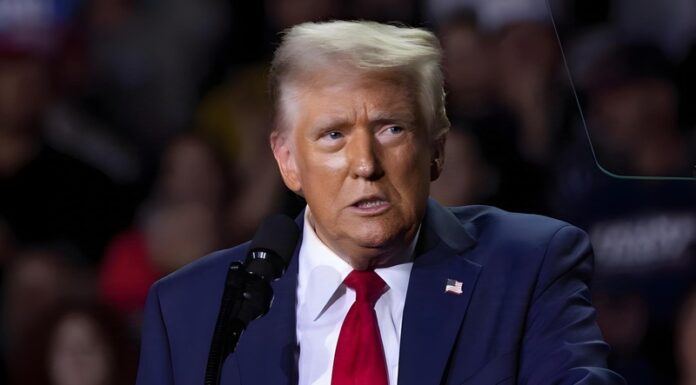
President Donald Trump’s widely anticipated presidential address left viewers across the nation confused and underwhelmed, with critics questioning both the substance and delivery of the speech that dominated prime-time television.
The address, which Trump used to announce Christmas warrior dividend payments to military personnel, drew immediate criticism from political observers and commentators who expected a more significant announcement. Journalist Matthew Keys captured the sentiment of many viewers, stating the speech “could have been a late-night Truth Social post.”
The confusion was compounded by expectations set earlier by Tucker Carlson, who had suggested Trump would announce war against Venezuela during the address. Trump did not mention Venezuela in his speech, leaving many viewers puzzled about the disconnect between the pre-speech speculation and the actual content delivered.
Rick Wilson and Niall Stanage, a columnist covering the White House, were among the critics of Trump’s delivery. The criticism extended beyond political opponents, with multiple observers questioning the president’s presentation style during the address.
Andrew Feinberg and other commentators, including Dana Loesch and Aaron Rupar, also weighed in on the speech’s reception and content.
Despite the widespread criticism, some conservative commentators defended the address. Michael Knowles and Charlie Kirk also commented on the speech’s reception among different political circles.
The address came as other Trump administration officials faced their own challenges in Washington. FCC Chair Brendan Carr testified before the Senate Commerce Committee, where he faced questions from senators including Amy Klobuchar, Ed Markey, Ben Ray Lujan, and Andy Kim. The hearing touched on issues including ABC’s suspension of Jimmy Kimmel in September.
In a separate development this week, EEOC Chair Andrea Lucas issued a public service announcement encouraging white men to file discrimination claims, a move that sparked its own controversy amid ongoing debates about workplace equality and civil rights enforcement under the Trump administration.
The employment landscape has shown varied results across demographic groups. Current figures show the national unemployment rate stands at 4.6%, while the white male unemployment rate sits at 3.6%. The Black unemployment rate of 8.3% continues to highlight persistent disparities in the labor market, raising questions about the administration’s economic policies and their impact on different communities.
The address represents a significant moment for the Trump presidency, though perhaps not in the way the administration intended. The gap between the pre-speech buildup—particularly Carlson’s suggestion of a Venezuela war announcement—and the actual content delivered created a credibility gap that critics were quick to exploit. The decision to use prime-time network coverage for what many characterized as routine policy announcements raised questions about the strategic communications approach of the White House.
Political analysts note that presidential addresses traditionally serve as opportunities to rally public support for major initiatives or respond to national crises. The mixed reception to this speech suggests challenges ahead for the administration in effectively communicating its priorities and maintaining public attention for its agenda. The contrast between supporter and critic reactions also underscores the deeply polarized environment in which the president operates.
The immediate aftermath of the address saw social media platforms flooded with reactions ranging from mockery to defense, with hashtags related to the speech trending throughout the evening and into the following day. The debate over the speech’s effectiveness—or lack thereof—continued to dominate political discussions, overshadowing some of the policy substance Trump had attempted to communicate about military benefits and economic achievements.
As the administration moves forward from what critics have labeled a missed opportunity and supporters frame as effective media manipulation, questions remain about how future presidential communications will be structured and promoted. The Venezuela speculation debacle particularly highlighted the risks of unofficial surrogates creating expectations that official announcements fail to meet, a dynamic that could complicate future White House messaging efforts and strain relationships with both media outlets and the president’s own political allies who had amplified the pre-speech speculation.