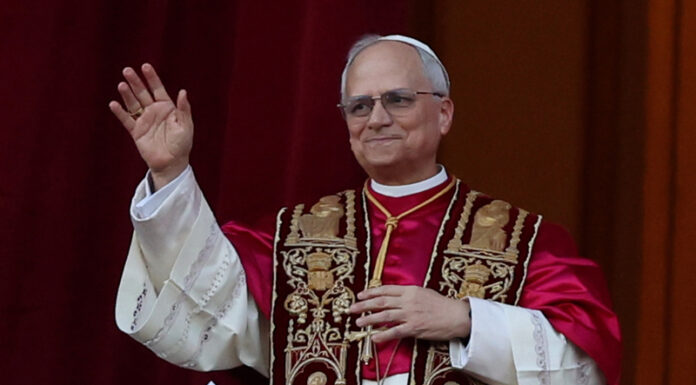
Pope Leo XIV insisted Tuesday, Dec. 9 that Europe must have a role in any Ukraine peace deal and criticized what he said was the Trump administration’s effort to “break apart” the long-standing U.S.-European alliance.
The American pope spoke to reporters after meeting with Ukrainian President Volodymyr Zelenskyy at Castel Gandolfo, Italy, south of Rome. Leo said they discussed the need for a ceasefire and the Vatican’s efforts to facilitate the return of Ukrainian children taken by Russia.
Zelenskyy is on a tour to rally European support for Kyiv as international efforts to negotiate an end to the conflict intensify. The meeting between the two leaders marked the third time Pope Leo has met with the Ukrainian President.
When asked about peace negotiations and the apparent sidelining of European powers in the process, Leo insisted that Europe’s role was crucial to any deal. “Seeking a peace agreement without including Europe in the talks is unrealistic, given the war is in Europe,” he said.
The pope’s comments come as discussions continue over a framework document of 20 points, with security guarantees and provisions about Ukraine recovery. Three documents are part of the peace agreement being discussed among various parties.
Leo appeared to respond to broader questions about the Trump administration’s views on the U.S.-European alliance. The Trump administration released its U.S. national security strategy, which questions the U.S.-European alliance and stresses a desire to improve U.S.-Russia relations.
The pope said the strategy would make huge change in alliance between Europe and the U.S. He noted that some comments by Donald Trump suggest an effort “trying to break apart what I think needs to be an alliance today and in the future.”
While acknowledging that some Americans may support this approach, Leo said many others would see things differently. His direct criticism of the Trump administration marks a significant intervention by the Holy See into international diplomatic discussions.
The Vatican has tried to remain neutral in Russia’s war while offering solidarity and concrete assistance to the people of Ukraine. Pope Leo has called for a ceasefire and urged Russia to make gestures to promote peace.
The American pope has also spoken by telephone at least once with Russian President Vladimir Putin as part of the Vatican’s diplomatic efforts. These conversations represent part of a broader strategy by the Holy See to encourage dialogue between all parties involved in the conflict.
One particular focus of Vatican efforts has been the return of Ukrainian children taken by Russian authorities during the war. Pope Leo met with returned Ukrainian children at the Vatican last month, highlighting the humanitarian dimensions of the conflict that extend beyond battlefield concerns.
The meeting between Leo and Zelenskyy underscores the complex diplomatic landscape surrounding efforts to end the war. European leaders have expressed concern about being marginalized in peace negotiations, particularly as the Trump administration pursues its own approach to resolving the conflict.
Leo’s insistence on European involvement reflects practical realities as well as political considerations. The document with security guarantees being discussed would necessarily involve European nations, given the continent’s proximity to the conflict and its role in any long-term security architecture.
The pope emphasized that Europe must be part of discussions about both immediate security arrangements and future guarantees. His comments suggest that any peace deal that excludes European participation would lack the comprehensive support needed for lasting stability.
The framework document of 20 points represents one component of the broader peace agreement being discussed. Separate provisions address security guarantees and Ukraine recovery, indicating the multifaceted nature of any potential settlement.
Leo’s criticism of efforts to break apart the U.S.-European alliance represents a notable departure from the Vatican’s typically measured diplomatic language. The pope’s willingness to speak directly about tensions between Washington and European capitals reflects the gravity with which the Holy See views current geopolitical developments.
The timing of Leo’s comments coincides with Zelenskyy’s efforts to secure continued European support for Ukraine. The Ukrainian President’s tour aims to reinforce commitments from key allies as the war continues and diplomatic initiatives multiply.
Pope Leo has now met three times with Zelenskyy, demonstrating sustained Vatican engagement with Ukrainian leadership. These meetings complement the Holy See’s broader diplomatic efforts, including outreach to Russian leadership and humanitarian initiatives focused on war-affected populations.
The pope’s statements signal that the Vatican views the preservation of the U.S.-European alliance as essential not only for resolving the Ukraine conflict but for maintaining broader international stability. His call for unity among European leaders emphasizes the importance of coordinated responses to security challenges.
As negotiations over Ukraine’s future continue, Leo’s intervention adds a significant religious and moral dimension to discussions that have been dominated by military and strategic considerations. The pope’s insistence that Europe must have a role in any peace deal reflects both geopolitical realities and the Vatican’s vision for international cooperation.