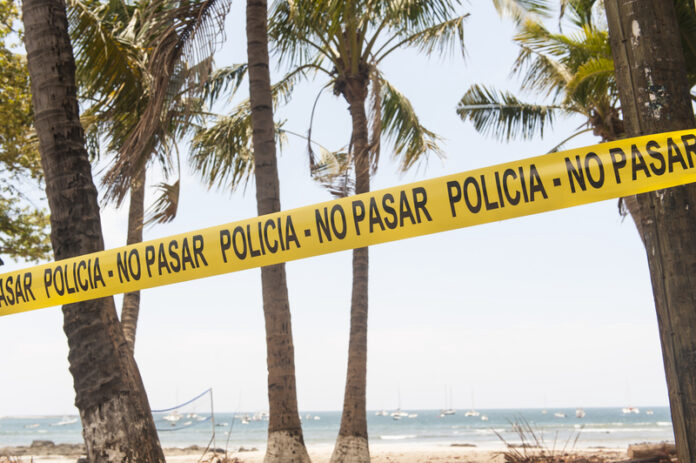
Six people, including a two-year-old girl, were killed when armed men opened fire on a boardwalk in Puerto Lopez, a beach resort in southwestern Ecuador. Three others were injured in the attack.
The shooting occurred on Dec. 28, 2025, at 9 a.m. local time when several men with automatic weapons arrived in a van and on motorcycles. The attackers opened fire on people gathered along the beachfront before fleeing the scene.
Regional police commander Colonel William Acurio confirmed the death toll and said the girl was approximately two years old. The attackers fled before officers arrived, and no arrests have been announced.
Police suspect an internal dispute between gangs motivated the assault. “The whereabouts of the shooters were unknown, with initial reports pointing to a motive of an internal dispute between criminal groups,” authorities said in a statement.
The attack marked the third deadly shooting in Puerto Lopez over the weekend, with nine total people killed in separate incidents. The coastal town, located in Manabi province, is known as a whale-watching destination popular with domestic and foreign tourists.
A state of emergency has been in effect in Manabi since August 2025 as authorities attempt to control escalating gang violence in the region.
The weekend violence underscores how criminal activity now regularly affects public and tourist areas across Ecuador. Once considered a peaceful nation, Ecuador has experienced a dramatic surge in violence by gangs linked to Mexican and Colombian cartels.
Ecuador sits between Colombia and Peru, the world’s two largest cocaine producers, making it a strategic corridor for international drug trafficking. Criminal organizations have exploited this geographic position to establish control over smuggling routes leading to the United States and Europe.
The country is on track to end the year with a record murder rate for 2025. Killings and clashes in neighborhoods and public spaces have become commonplace, with Ecuador expected to reach 52 homicides per 100,000 residents, according to the Organised Crime Observatory Geneva.
This murder rate would place Ecuador among the most violent countries in Latin America, surpassing several nations traditionally associated with high levels of drug-related violence.
President Daniel Noboa has declared Ecuador to be in an internal armed conflict and instituted hardline policies against organized crime. The government has deployed military forces to support police operations and declared multiple states of emergency across various provinces.
Despite these measures, the violence has continued to escalate. Critics argue that heavy-handed approaches have merely displaced criminal activity rather than eliminating it, with gangs adapting their operations and expanding into new territories.
The human cost extends beyond adults caught in gang crossfire. Child homicides have surged 640 percent as criminal organizations increasingly conduct attacks in public spaces without regard for innocent bystanders.
The two-year-old girl killed in Puerto Lopez represents the youngest victim in this weekend’s violence. “Child homicides have surged 640 percent,” security analysts noted, highlighting how children have become regular casualties in Ecuador’s deteriorating security situation.
Gang violence has transformed once-peaceful coastal communities into conflict zones where residents fear gathering in public spaces. What were previously safe areas for families and tourists have become potential targets for armed attacks as rival criminal groups battle for territorial control.
The tourism industry in Manabi province has suffered significant damage from the recurring violence. Puerto Lopez, which built its economy around whale-watching tours and coastal tourism, now struggles to attract visitors as reports of shootings and security incidents spread.
Local businesses dependent on tourism revenue face declining income as both domestic and international visitors avoid areas perceived as dangerous. The economic impact compounds the human tragedy, as communities lose both lives and livelihoods to gang warfare.
Security experts note that Ecuador’s transformation from a relatively peaceful nation to one plagued by record violence occurred rapidly over recent years. The country lacks the institutional experience and resources that neighboring nations developed over decades of confronting powerful drug cartels.
Criminal groups operating in Ecuador reportedly maintain connections to major Mexican and Colombian cartels, benefiting from sophisticated organizational structures and access to weapons. These international connections have allowed gangs to quickly establish control over drug trafficking routes and challenge government authority.
The shooting in Puerto Lopez demonstrates how criminal organizations now operate with apparent impunity even in daylight hours and popular tourist locations. The attackers’ ability to arrive heavily armed, conduct their assault, and escape before police arrived highlights the challenges facing Ecuadorian security forces.
Investigators continue searching for the shooters while examining whether the attack connects to broader patterns of gang activity in the region. The lack of immediate arrests reflects the difficulties authorities face in responding to highly mobile criminal groups capable of striking quickly and disappearing into surrounding areas.
For residents of Puerto Lopez and similar communities across Ecuador, the prospect of returning to normalcy appears distant. The escalating violence has fundamentally altered daily life, with people avoiding public gatherings and businesses closing early to reduce exposure to potential attacks.