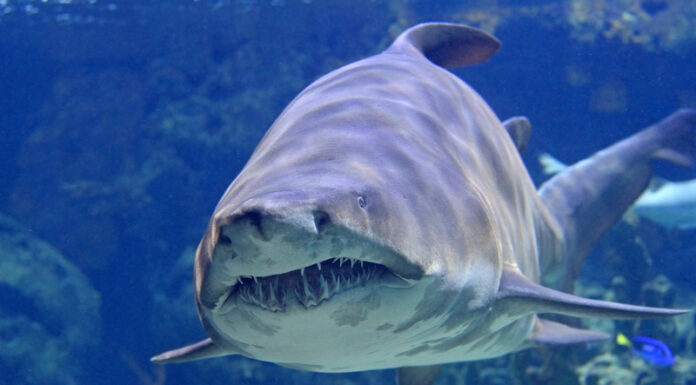
A shark attack at a remote New South Wales beach on Thursday, Nov. 27, 2025, claimed the life of a woman and left a man with serious injuries in what experts describe as an exceptionally rare double attack. The incident occurred at Kylies Beach within Crowdy Bay National Park, approximately 224 miles north of Sydney, at 6:30 a.m. local time.
Emergency services responded to reports that two swimmers in their mid-20s had been bitten by a shark. The victims, identified through media reports as Swiss nationals Livia Muhlheim, 25, and Lukas Schindler, 26, were known to each other and had been going for a swim when the attack occurred. Authorities have not officially released their identities pending notification of family members overseas.
The woman died at the scene despite assistance from bystanders who arrived before paramedics. The man was airlifted to John Hunter Hospital in Newcastle after sustaining serious injuries. He was initially listed in critical condition but has since stabilized, according to hospital officials.
A bystander’s quick thinking may have prevented a second fatality. The individual applied a makeshift tourniquet to the man’s leg before emergency responders arrived, stemming blood loss from severe injuries. Paramedic Joshua Smyth praised the intervention during a press briefing. “I just really need to have a shoutout to the bystander on the beach who put a makeshift tourniquet on the male’s leg which obviously potentially saved his life and allowed New South Wales Ambulance paramedics to get to him and render first aid,” Smyth said.
Police Chief Inspector Timothy Bayly addressed reporters but declined to provide extensive details about the circumstances. “At this stage, all I’m prepared to say is they were known to each other and they were going for a swim and the shark attacked,” Bayly stated. Police are working with marine experts to determine the species responsible, though a large bull shark is believed to have carried out the attack.
According to media reports, Schindler had recently become a scuba instructor. Some sources indicate the couple may have been filming dolphins when the incident occurred, and police are reviewing GoPro footage to piece together the sequence of events. The shark involved was approximately three meters long based on witness descriptions.
Authorities responded by closing beaches in the area indefinitely and deploying five SMART drumlines—baited hooks suspended from floats—off Kylies Beach to monitor shark activity. Additional drumlines were already positioned at Port Macquarie to the north and Forster to the south as part of ongoing shark management efforts in the region.
Marine experts emphasized the unusual nature of a single shark attacking two people. Gavin Naylor, director of the University of Florida’s shark research program and manager of the International Shark Attack File database, described such incidents as exceptionally rare. “It is very unusual. Individual shark attacks are rare. And shark attacks on two people by the same individual is not unheard of, but it’s very rare,” Naylor explained.
Naylor noted that understanding the shark’s behavior would require examining details of the attack sequence, including the shark’s size and whether other prey was present. He pointed to tiger sharks as the species most commonly linked to dual attacks, though he said white sharks have never exhibited such behavior unless someone intervened heroically.
The incident resonated deeply with shark attack survivors in the area. Dave Pearson, who founded the Bite Club peer support group after surviving a bull shark attack in 2011 just 14 kilometers away at Crowdy Head, received numerous calls from concerned community members. The Bite Club now includes 600 members worldwide who support each other through the trauma of shark encounters.
Pearson also serves on New South Wales’ Shark Incident Response Team, which provides community support following serious attacks. He spoke about the challenges survivors face, including victim-blaming comments on social media that have driven some to consider taking their lives. Mental health support was being offered to those affected through the Department of Primary Industries and Regional Development’s Rural Adversity Mental Health Program, along with the Bite Club, Surfing NSW, and Surf Life Saving NSW.
The Swiss Consulate confirmed involvement with the case, stating they were in contact with local authorities and supporting the relatives within the framework of consular protection. The consulate’s assistance underscores the international dimension of the incident, with European tourists facing a medical emergency far from home.
This marks the third fatal shark attack in Australia for 2025, adding to ongoing discussions about beach safety and shark management strategies. Crowdy Bay National Park is known for beach camping, fishing spots, and hiking tracks, drawing visitors to its remote coastline. The area’s isolation meant no lifeguards were present when the attack occurred, making the bystander’s intervention all the more critical.
A formal report will be prepared for the coroner as authorities continue investigating the circumstances surrounding the attack. Police are working to piece together a complete timeline of events while awaiting expert analysis of the shark species involved and factors that may have contributed to the rare double attack.