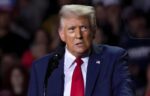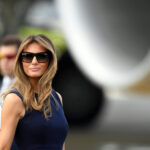
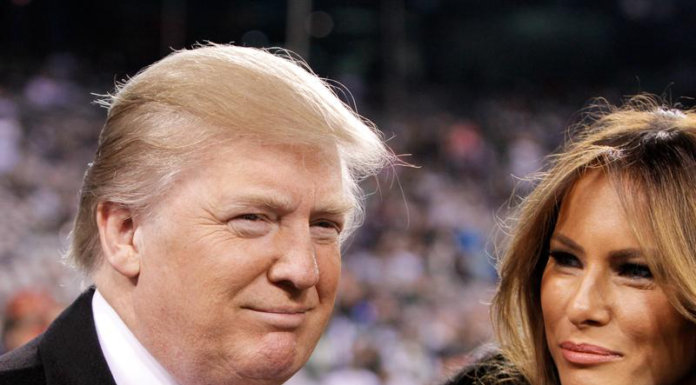
The White House generated significant online buzz with a TikTok video posted on Monday, November 3, 2025. The clip featured President Donald Trump and First Lady Melania Trump, set to a viral mashup of Nicki Minaj’s “Beez in the Trap” and 4 Non Blondes’ “What’s Up?” The unexpected video elicited immediate reactions from both the rapper and millions of viewers, who did not foresee the first couple dancing to the hip-hop artist’s music.
The 22-second video featured scenes of the Trumps walking hand in hand during various events, dancing on the White House balcony, and attending the inauguration. The images played over the mashup, blending pop culture with presidential imagery, and quickly went viral on social media.
Minaj, 42, expressed her excitement on X, stating she was unaware which fan, known as the Barbz, uploaded the video to the White House TikTok account. According to Fox News, she promised “unlimited backstage GAG CITY FOR LIFE” to the person responsible for this unexpected collaboration. The rapper mentioned she was unsure what timeline they were on, but decided to embrace it.
The viral incident occurred shortly after President Trump’s granddaughter, Kai Trump, participated in a similar social media trend with a friend. When Minaj reposted that video in October, Kai responded with another clip, acknowledging the rapper’s attention. The trend has been gaining traction on TikTok for months, with users creating videos set to the mashup.
This interaction signifies a shift in the relationship between Minaj and the Trump administration. The rapper recently thanked the president for addressing the persecution of Christians in Nigeria, emphasizing her gratitude that Americans can freely worship. She highlighted on X that no group should face persecution for their religion and that differing beliefs should not hinder mutual respect.
President Trump had addressed the situation in Nigeria on Truth Social, noting that Christianity is facing an existential threat there, with thousands killed by radical Islamists. He stated that the United States cannot remain passive and affirmed the nation’s readiness to protect Christians globally.
Minaj acknowledged that many countries are affected by such violence and stressed the danger of ignoring it. She thanked the president and his team for their serious approach to the issue, urging people to remember persecuted Christians in their prayers. U.S. Ambassador to the United Nations Mike Waltz thanked Minaj for leveraging her platform to support persecuted Christians and invited her to meet with him at the U.S. Mission to the United Nations in New York for further talks.
The White House TikTok post received mixed responses from social media users. Many expressed surprise, with one comment noting that the collaboration was not on their 2025 bingo card. Another user remarked that it was a partnership nobody knew they needed. The video gained millions of views within hours, illustrating the power of viral trends to capture public interest.
The incident highlighted the administration’s increasing involvement with popular social media platforms and trends. The official White House TikTok account has been participating in viral moments, although this video was notable for pairing a hip-hop artist with a president who has had complex relationships with entertainment figures throughout his political career.
Minaj’s original song “Beez in the Trap,” featuring 2 Chainz, was released in 2012. The mashup with 4 Non Blondes’ 1992 hit “What’s Up?” has experienced renewed popularity on TikTok. The combination has become recognizable to social media users, making it a popular choice for video content on the platform.
The rapper’s positive interaction with the Trump administration surprised some followers, given the typically polarized nature of political discourse in the entertainment industry. However, Minaj clarified that her response focused on religious freedom and the protection of persecuted Christians, rather than broader political alignment. Her statements emphasized mutual respect across different belief systems as a principle worth supporting, regardless of political differences.