Former Vice President Dick Cheney died Monday, November 3, 2025, at age 84, surrounded by family members. The Wyoming Republican, who served under President George W. Bush from 2001 to 2009, succumbed to complications from pneumonia along with cardiac and vascular disease that had plagued him for years.
Cheney’s death marks the end of a political career spanning five decades that reshaped American foreign policy and fundamentally altered the vice presidency itself. He had survived five heart attacks, multiple surgeries and a heart transplant throughout his lifetime, defying medical odds to reach his mid-80s.
The former vice president is survived by his wife Lynne and daughters Mary and Liz. His funeral will be held at 11 a.m. Eastern Time on Thursday, November 20, at the Washington National Cathedral in Washington, D.C.
Bush issued a statement calling Cheney “the one I needed” as a vice president and described him as a “calm and steady presence in the White House amid great national challenges.” The former president’s tribute stood in stark contrast to the silence from current President Donald Trump, who as of Friday had not made any public comment about Cheney’s passing.
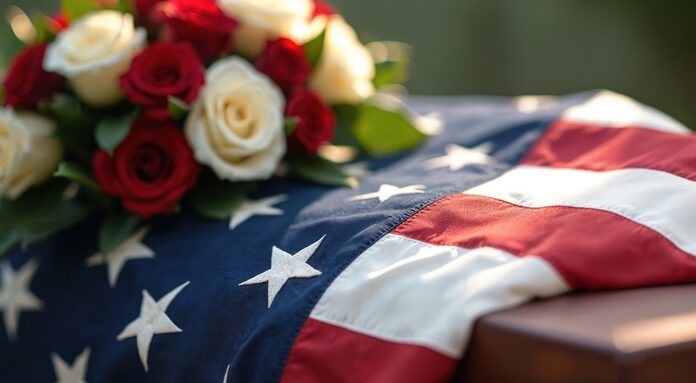
The White House confirmed that flags at the presidential residence had been lowered in accordance with statutory law, which mandates flags fly at half-staff from the death of a former vice president until the day of burial. However, Trump did not issue a national proclamation ordering all federal buildings and facilities to lower their flags, a departure from traditional protocol for honoring former national leaders.
The strained relationship between Cheney and Trump became increasingly public in recent years. In 2022, Cheney stated that “in our nation’s 246-year history, there has never been an individual who is a greater threat to our republic than Donald Trump.” He called the current president “a coward” who “tried to steal the last election using lies and violence to keep himself in power after the voters had rejected him.”
In 2024, Cheney endorsed Democratic candidate Kamala Harris for president, a move that effectively severed his remaining ties to the Trump-dominated Republican Party. Trump responded by calling Cheney an “irrelevant RINO,” using the derogatory acronym for “Republican in name only.”
Senate Majority Leader John Thune indicated that Republican leadership staff was reviewing protocol regarding the possibility of Cheney lying in state in the Capitol rotunda. Such an honor is typically reserved for presidents and other prominent political figures. Alaska Representative Don Young, the longest-serving Republican in House history, received this distinction when he died in March 2022.
Cheney’s political influence extended well beyond his eight years as vice president. He served as White House chief of staff under President Gerald Ford, represented Wyoming in the House of Representatives, and was appointed Defense secretary by President George H.W. Bush before joining the younger Bush’s administration. Prior to his vice presidency, he served as CEO of Texas oil field services giant Halliburton.
The former vice president was born in Lincoln, Nebraska, in 1941, and grew up in Wyoming, where he later retired. His death has drawn varied reactions across the political spectrum. Former Florida Governor Jeb Bush, brother of George W. Bush, called him a wonderful person and a great patriot. Florida Senator Rick Scott noted that Cheney dedicated his life to serving the country.
Many Republicans, however, remained conspicuously silent. Texas Senator John Cornyn, who in 2009 praised Cheney as a thoughtful critic and said he would be proud to appear with the vice president anywhere, declined to comment through his office on Cheney’s death. Several Texas Republicans in Congress, including Representatives Wesley Hunt, Dan Crenshaw, Randy Weber and Chip Roy, also did not issue statements.
The muted response from many Republican officials reflects the party’s dramatic transformation since the Bush era. Cheney’s legacy as a powerful advocate for aggressive foreign policy and expanded executive authority now sits uneasily within a party increasingly defined by Trump’s populist and isolationist positions. Florida Governor Ron DeSantis, who had ordered flags lowered for former Democratic President Jimmy Carter and Florida Senator Bob Graham, also issued no statement about Cheney’s death.